
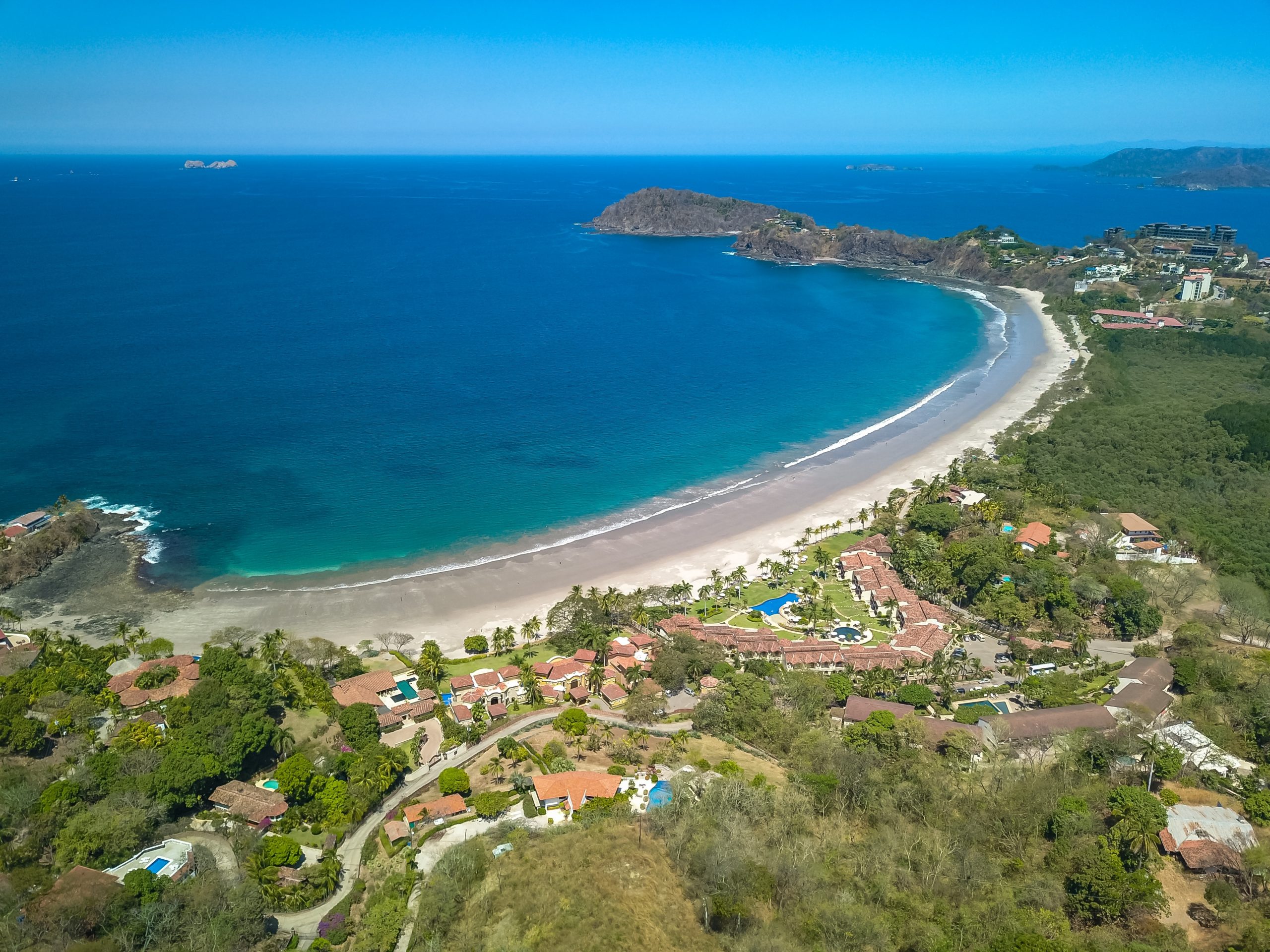
Investment Analysis
Gross yield, net yield, the full cost stack, and whether a Mar Vista rental actually performs.
Gina Briguglio · June 18, 2026
Most listings for Costa Rica’s Gold Coast sell you a sunset. The infinity pool. The howler monkeys. The surf break ten minutes down the hill. What they skip is the part you actually need: what the property nets after the management company, the tax office, and the air-conditioning bill take their cuts.
That gap is the whole question behind any Playa Flamingo rental property investment. This isn’t a guide to how you rent a Mar Vista home. The rental models, guest demand, and live-and-rent setup are covered in our companion piece on how to generate rental income in Mar Vista. This article is the financial breakdown underneath it: gross yield, net yield, the cost stack, and seasonality. The figures below are illustrative estimates from current Guanacaste market observation. They are numbers to model with, not quotes to bank on.
What is a realistic gross yield in Playa Flamingo?
Based on current market observation, a well-marketed, ocean-view luxury estate can realistically target an annual gross rental yield of 8% to 12% of purchase price. On an $899,500 property, that’s roughly $71,960 to $107,940 in gross revenue in a strong year. The figure is plausible — but it’s also the most misleading number in any pro forma, because almost nobody keeps it.
Why gross yield is not net ROI
The gross-to-net gap on this coast is wider than most brochures admit.
For underwriting purposes, full-service Guanacaste property management typically runs 20% to 30% of gross revenue. That covers bilingual staff, guest turnover, and maintenance handled while you’re an ocean away. Then add local income tax, the luxury home tax, infrastructure costs, and heavy tropical electricity bills. In many comparable luxury scenarios, total operating overhead lands closer to 45% to 50% of gross.
Model it out and a headline 10% gross yield compresses to roughly 5% net before financing. That’s not a reason to walk away. Plenty of markets would envy a 5% net on an appreciating coastal asset. But it is the reason to underwrite to the net. If a deal only pencils at the gross figure, it doesn’t pencil.
The gross-to-net math, modeled
Here is the same logic as an illustrative model on an $899,500 property. Treat it as a framework for your own underwriting, not a projection of returns:
| Scenario | Gross Yield | Gross Revenue | Est. Overhead | Est. Net Before Financing |
|---|---|---|---|---|
| Conservative | 8% | $71,960 | 50% | $35,980 |
| Base case | 10% | $89,950 | 50% | $44,975 |
| Strong year | 12% | $107,940 | 45% | $59,367 |
Even the strong-year case — a 12% gross yield with overhead held to 45% — nets about 6.6% before financing. The conservative case nets around 4%. That spread is the real decision. Not whether Mar Vista rents, but which end of the range your property, operator, and management discipline land on.
The real cost stack: management, taxes, HOA, utilities, maintenance
Here is where the net actually goes, line by line. Management is the largest single deduction at an estimated 20–30% of gross. Taxes stack: ordinary income tax on rental earnings plus Costa Rica’s annual luxury home tax on higher-value properties. Utilities are heavier than buyers expect. Air conditioning on a coastal villa through peak season is a real line item, not a rounding error. Maintenance runs high in a salt-air environment, where pools, fixtures, and exteriors weather fast.
HOA is the one place Mar Vista works in your favor. Fees average around $390 a month for a fully constructed home — lean for a gated luxury community. That covers 24/7 guarded security, a fitness center, lighted courts, and maintained trails, with no resort-grade assessments skimming the return.
That value holds for a reason. The community runs on a structured legal condominium framework (Costa Rica’s Ley 7933), with paved roads, underground utilities, and a private water system. Maintenance stays predictable as a result. That’s one fewer variable in the net calculation, and a real edge over the patchy systems of fragmented developments elsewhere in the Playa Flamingo real estate market.
What many buyers miss is that the first 10% of revenue often looks easy on paper. The final 2% to 3% of net return is harder. It depends on operational discipline: AC controls, linen replacement, pool service, preventative maintenance, guest screening, review management, and pricing during shoulder weeks. Those details rarely appear in listing copy. But they decide whether the annual return lands closer to the conservative case or the strong-year case above.
How seasonality changes the annual return
A premium property here books an estimated 22 to 26 weeks a year — but the weeks aren’t spread evenly, and that imbalance drives the whole return.
December through April is the dry-season peak. Premium sunset-view villas can command $500 to well past $1,200 a night. This five-month window generates most of the annual income. May through November is the green season. Rains arrive, nightly tourism thins, and a short-term-only model watches the calendar empty.
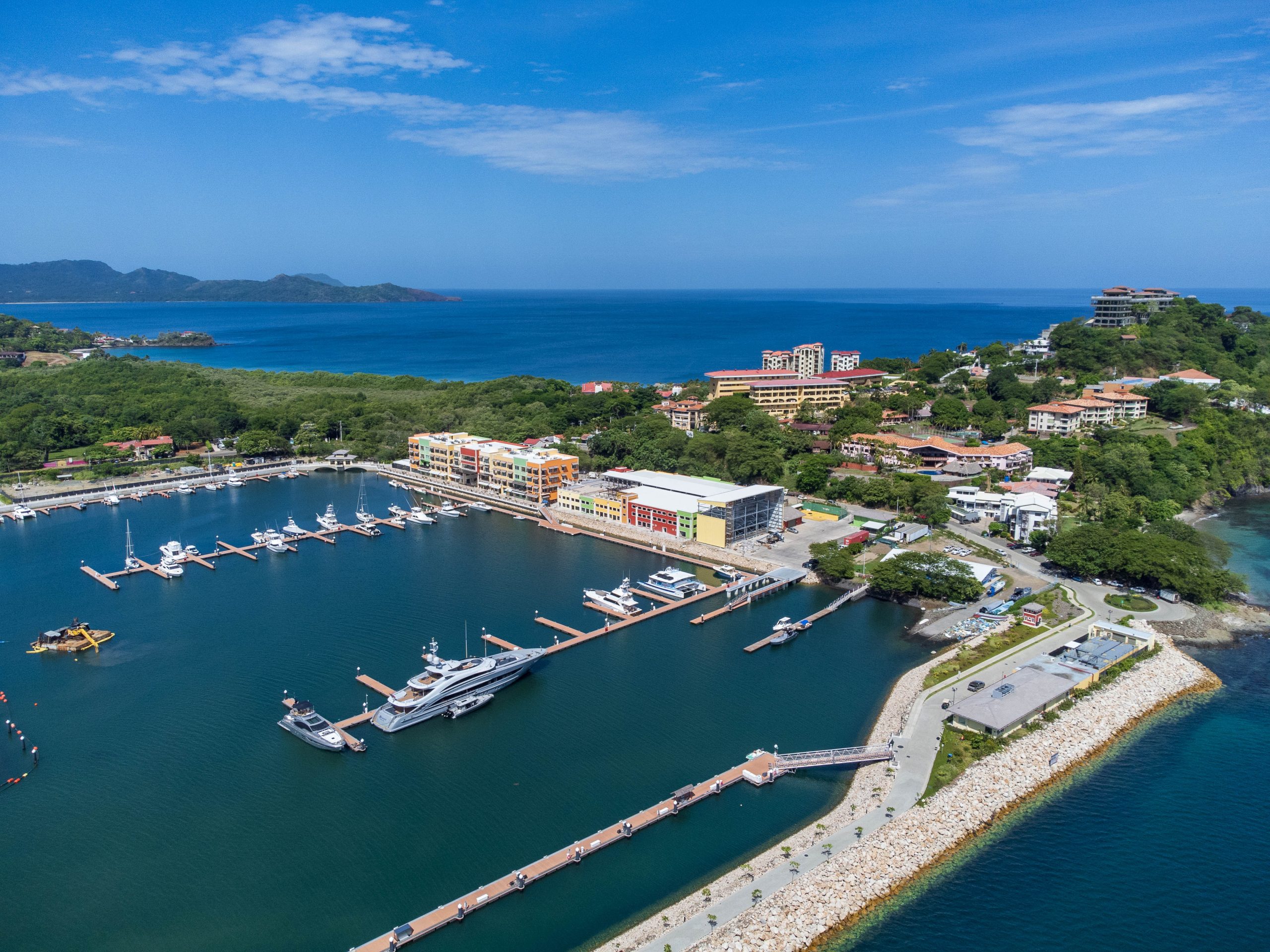
An honest annual model weights heavily toward the peak months. It treats green-season nightly bookings as upside, not baseline. The marina helps. The Flamingo Marina sits five to ten minutes away, lifting both rates and long-term appreciation across the wider Playa Flamingo community — but it doesn’t flatten the seasonal curve. The marina project has fully established Playa Flamingo as a world-class luxury hub. Layout does.
How Dual-Residence Layouts Protect Net Yield
The single biggest lever on net income isn’t management or marketing — it’s layout. A property built as two independent residences lets you run both short-term through peak season. Then you convert one to a long-term lease for the green-season months, capturing the school-calendar tenant demand that runs September through June.
That second income stream fills the green-season hole the model is so sensitive to. It’s also what defends net yield across the broader Guanacaste real estate market in a soft year. The rental strategy itself is covered in the rental income guide; here, the focus is how that structure affects net yield.
Twin Sisters as an ROI case study
The Mar Vista listing known as Twin Sisters shows the dual-residence math in one asset.
| Feature | Specification |
|---|---|
| Price | $899,500 USD |
| Lot Size | 5,042 m² (oversized 1.25-acre lot) |
| Configuration | 4 bed / 4 bath |
| Layout | Two fully independent 2-bed, 2-bath residences (~1,600 sq ft each) |
| Amenities | Private pool for each villa |
| Views | Dual-aspect panoramic ocean and mountain sunset views |
Model it as two revenue lines. Villa A runs at an estimated $600/night through peak season, chasing the high-yield vacation market. Villa B sits on a 12-month expat lease, providing a stable monthly floor that carries the green season. The blended result is a flatter, more defensible annual return than a single-structure home of the same price could produce. Two income streams from one purchase — that’s the whole argument for buying layout over square footage. In practice, this is the kind of layout we look for when a buyer wants income potential without giving up personal use or leaning entirely on peak-season tourism.
Field note: what we look for before calling a property rental-ready
In practice, we don’t evaluate rental potential by bedroom count alone. We look at whether the home can carry more than one income strategy: separate entrances, independent kitchens, privacy between guest areas, usable outdoor space, parking, view quality, and road access. The real test is whether it can shift between vacation guests, long-term tenants, and owner use without disrupting the income stream. That flexibility is where dual-residence properties like Twin Sisters become more interesting than a larger single-home layout of the same price.
Explore the Twin Sisters listing →
To compare how other Mar Vista properties are priced and positioned for return, you can explore the Mar Vista real estate market, or read more about the Mar Vista community itself.

Founder of Costa Rica Real Estate CR and a licensed agent and broker with over 30 years of experience on the Guanacaste coast, helping international buyers buy, sell, invest, and relocate with confidence.
Mobile 506.8423.4370 · Phone +312 399 2857 · Email info@crrecr.com
Disclaimer: The figures above — yields, occupancy weeks, management fees, nightly rates, and holding costs — are illustrative market estimates and will vary by property, season, operator, and tax treatment. This article is for informational purposes only and is not financial, legal, or tax advice. Buyers should confirm current numbers with a qualified local advisor before making an investment decision.