
Inland Living
Beyond the Beach: Why Inland Guanacaste Real Estate Is Gaining Attention
Explore why inland Guanacaste real estate is attracting buyers seeking larger lots, more privacy, practical living, and easy access to the coast.
Gina Briguglio · September 2026
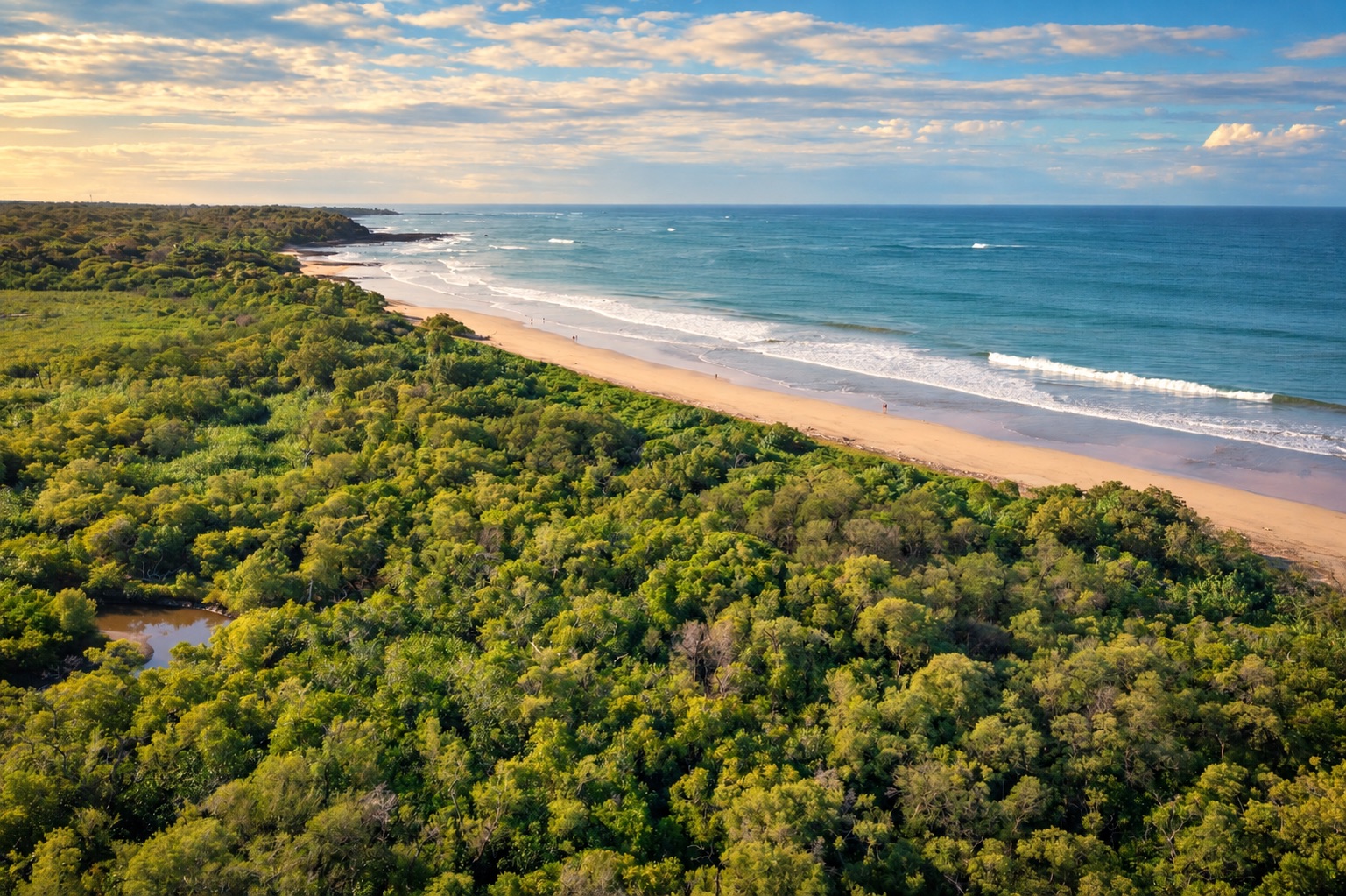
Ask a buyer in 2021 what they wanted in Guanacaste and the answer was almost always the same: as close to the sand as the budget allowed. Ask that same question today, and the conversation has changed. More buyers are pulling out a map, tracing a finger ten or fifteen minutes inland from Tamarindo or Flamingo, and asking their agent a different question entirely — what can I get back there instead?
That shift isn’t nostalgia for the “real Costa Rica” or a consolation prize for buyers priced out of the coast, though pricing is certainly part of it. It’s a recalibration. Buyers who spent a week or a season in a beachfront rental have started noticing the trade-offs that come with the view: the HOA invoice, the parking lot of tourists on a Tuesday afternoon in high season, the lot line eighteen feet from the neighbor’s pool deck. None of that is a dealbreaker for a two-week vacation. For a life, it adds up differently. So the search radius has widened. Residential corridors like La Josefina and La Garita, strung along the Huacas–Villarreal transit axis, are absorbing buyers who still want the Gold Coast lifestyle but have stopped insisting on beachfront zip codes to get it.
This piece looks at why that shift is happening, what the data behind it actually shows, and what buyers should understand before deciding whether the beach or the corridor behind it is the better fit.
Why Some Guanacaste Buyers Are Looking Beyond the Beach
A More Mature Guanacaste Real Estate Market
The easiest way to describe the Guanacaste market right now is “settling in.” Provincial property values are forecast to grow by roughly 6% in 2026, according to TheLatinvestor’s real estate intelligence data — a number that reads as unremarkable next to the double-digit swings of the pandemic boom, and that’s precisely the point. Six percent is the kind of growth a market posts when buyers are pricing property on fundamentals rather than momentum.
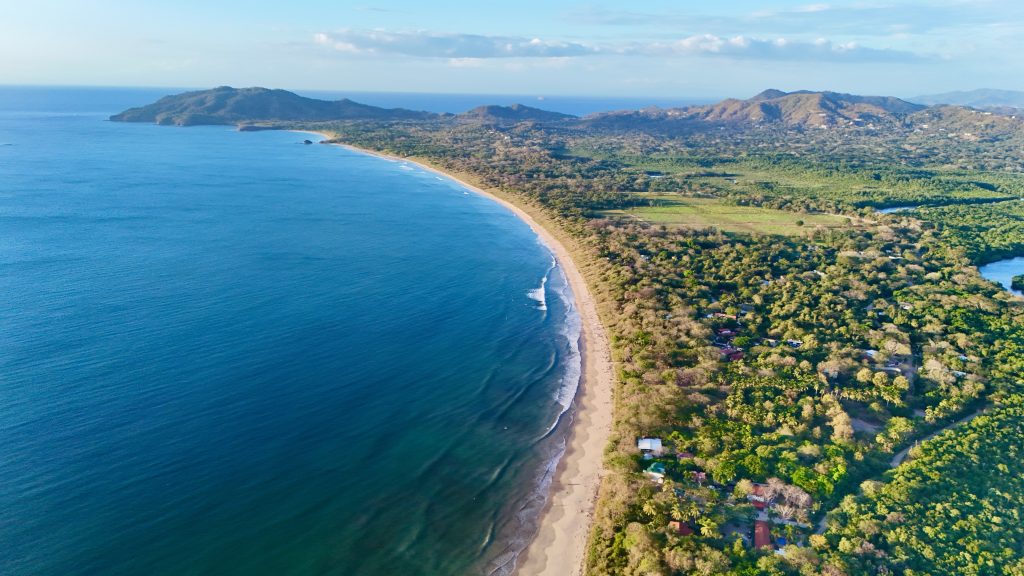
Beneath that provincial average, buyer interest is increasingly extending into secondary residential corridors, with the Huacas–Villarreal axis among the areas gaining attention. Based on Gina Briguglio’s experience reviewing local property activity and working with buyers throughout Guanacaste, much of this demand is coming from families and remote-work households seeking homes for full-time living. Their priorities — more space, greater privacy, access to everyday services, and continued proximity to the coast — are helping these inland communities become a more established alternative to the prime beach markets.
The Price and Space Divide
The number that tends to stop buyers mid-scroll is the spread between coastal and inland pricing. Global Property Guide reported median listing prices above $1.4 million across Guanacaste and the Nicoya Peninsula in 2026. Individual coastal markets and property types vary considerably, but well-located residential homes along secondary inland corridors often fall within the $400,000 to $600,000 range.
What matters is what that gap actually buys. It isn’t simply “the same house, cheaper” — it’s a different category of house: bigger lots, more bedrooms, private pools instead of shared amenity decks, and land held under simple title rather than the layered concession rules that govern much of the coastline.
The 10–15 Minute Inland Advantage
Larger Lots and More Privacy
Density is the defining feature of prime coastal real estate — land near the water is finite, so builders maximize what little of it exists. Typical lot sizes in high-demand beach hubs run 400 to 600 square meters. Move inland along an established corridor and lots of 1,500 square meters or more are common, opening up real gardens, room for a dog to run, a pool positioned for privacy, covered outdoor living space, and a buffer of mature trees between one house and the next.
Coastal Access Without Living in a Tourist Center
None of this requires giving up the coast — it requires giving up living directly inside it. A home in La Josefina or along the broader Huacas–Villarreal corridor still puts Tamarindo, Playa Conchal, Playa Flamingo, and Playa Potrero within a manageable drive, without the tourist traffic, the seasonal parking crunch, or the short-term rental turnover happening next door.
Ownership and Ongoing Costs
Fee-simple title — registered private ownership — is common in inland residential corridors such as La Josefina and La Garita because these communities are located away from the Maritime Terrestrial Zone. Coastal property, meanwhile, can include a mix of fee-simple and concession arrangements depending on proximity to the high-tide line. Inland corridor properties are more often independent, standalone lots with lower fee structures or none at all, while dense coastal condominium and community developments frequently carry HOA or maintenance fees.
Coastal Guanacaste vs. Inland Residential Corridors
| Market Attribute | Prime Coastal Hub | Inland Secondary Corridor |
|---|---|---|
| Typical Entry Range | $1.2M – $1.4M+ | $400K – $600K |
| Typical Lot Size | 400 – 600 m² | 1,500+ m² |
| Ownership | Can include titled and concession property | Fee-simple title common away from the Maritime Zone |
| Community Costs | HOA/condo structures common | Independent properties and lower-fee structures often available |
| Lifestyle Emphasis | Immediate tourism and beach access | Space, privacy, and full-time functionality |
Read side by side, the table isn’t an argument that one column wins outright — it’s a map of trade-offs. A buyer chasing walkable beach access will lean toward the left column; a buyer prioritizing land, privacy, and lower cost of ownership will find the right column does more of that work per dollar.
Why Practical Space Is Becoming More Important
Multi-Generational and Extended Family Living
Bedroom counts have quietly become a proxy for something bigger than sleeping capacity. In Gina Briguglio’s experience representing buyers across the Gold Coast, homes with five or six bedrooms are increasingly in demand — Guanacaste relocations rarely involve just one nuclear family anymore. Parents visit for months at a time. Adult children come and go. A home built for multi-generational living solves a logistics problem that a three-bedroom condo simply can’t.
Remote Work and Flexible Rooms
The other driver is remote work, which has quietly rewritten what a bedroom is for. An extra room can be a home office for a video call at nine in the morning, a fitness space in the afternoon, a studio for a hobby, or a guest suite when family shows up unannounced for the holidays. None of this requires the rooms to be formally built out — the value is in the flexibility itself.
Full-Time Living vs. Vacation-Rental Priorities
It’s worth separating this from the short-term rental conversation entirely, because the two markets are starting to want different things. In Gina’s experience working this market for over three decades, the vacation-rental segment in Guanacaste’s prime tourist hubs has gotten considerably more competitive, and a property optimized to perform as an Airbnb doesn’t always look like the property a family wants to occupy year-round. Buyers who are relocating rather than investing in a rental portfolio are increasingly willing to trade “rental-optimized” for “life-optimized.”
Daily Life Along the Huacas–Villarreal Corridor
Access to Schools, Shopping and Services
For a family actually living in Guanacaste year-round, the infrastructure that matters most isn’t a beach bar — it’s the school run, the pharmacy, and the grocery store. The Huacas–Villarreal corridor has developed around exactly that kind of daily logistics. It connects residents to bilingual and international education options such as Educarte, along with CRIA where geographically relevant, plus supermarkets, medical clinics, and the commercial services a household needs on an ordinary Tuesday rather than a vacation Saturday.
Featured Property
Casa Girasol — La Josefina, La Garita
| Location | La Josefina, La Garita, Guanacaste, Costa Rica |
| Price | $449,000 |
| Bedrooms | 6 |
| Interior | Approx. 1,700 sq. ft. |
| Lot | 1,560 m² |
| Outdoor Feature | Private swimming pool |
| Property Type | Single-family residence |
Six Bedrooms Create Flexible Living Space
Six bedrooms is not a common number in Guanacaste’s prime beach towns at this price point, and the value of that count isn’t just capacity — it’s optionality. A household could use the extra rooms for visiting parents one season and remote-work setups the next, and still have a room free for guests.
1,560 m² of Land and Private Outdoor Living
At 1,560 square meters, the lot is nearly triple the size of a typical coastal parcel, and the private pool means outdoor living space doesn’t have to be shared, scheduled, or maintained by an HOA on someone else’s timeline.
Residential Setting With Coastal Access
Casa Girasol’s position in La Josefina keeps it in a genuinely residential setting, while the Huacas–Villarreal corridor puts Tamarindo, Flamingo, and the rest of the Gold Coast within a reasonable drive.
Buying an Existing Home vs. Building in Guanacaste
Construction Costs and Currency
The colón has strengthened meaningfully against the U.S. dollar in recent years, and that shift has real consequences for anyone budgeting a build from scratch, since labor and materials in Guanacaste are largely priced in local currency. A stronger colón means a given construction budget in dollars simply buys less than it used to. Add rising material costs and skilled-labor demand into the mix, and a from-scratch build carries a wider range of possible outcomes than most buyers expect going in.
Important Note
Exchange rates move continuously, so buyers should confirm the current rate directly with the Central Bank of Costa Rica rather than relying on a fixed figure — what matters for planning purposes is the trend, not a snapshot number that will be outdated within months.
Why Turnkey Homes Can Offer More Predictable Costs
Buying an existing turnkey home means the buyer is pricing one number — the purchase price, plus standard due diligence and closing costs — against a known asset they can walk through before signing anything. Building from scratch means pricing land acquisition, design, permitting, site preparation, materials, labor, construction management, and a contingency buffer, all before a single wall goes up. Resale offers cost certainty on day one, in a market where currency and material costs have both been moving in the buyer’s least favorable direction.
Costa Rica Real Estate Terms Buyers Should Understand
Fee-Simple Title
Fee-simple title is registered private ownership recorded in Costa Rica’s National Registry, giving the holder full property rights with no expiration or renewal requirement. It’s the standard form of ownership in inland locations like La Josefina and La Garita.
Maritime Terrestrial Zone
The Maritime Terrestrial Zone, or MTZ, is the 200-meter strip of coastline measured from the mean high-tide line. Land within it is public property administered through concession rights rather than sold as conventional titled real estate, and any coastal property near or within this zone warrants specific legal review before a buyer moves forward.
ASADA and Water Availability
ASADAs are the community associations responsible for managing local water infrastructure in much of rural and semi-rural Costa Rica, including large parts of Guanacaste. Securing an official water availability letter — the carta de agua — from the relevant ASADA is a due-diligence step that should happen before a purchase closes, not after.
Common Myths About Living Inland in Guanacaste
Myth: You have to live directly on the beach to enjoy Guanacaste. Residential areas within a convenient drive of the coast can still deliver full beach access on any given day, while offering larger properties, quieter surroundings, and lower long-term maintenance than a beachfront lot typically demands.
Myth: Building is always cheaper than buying. Land price is only the opening line item. Once design, permitting, materials, labor, and project management are added in, an existing turnkey property often ends up more predictable — and sometimes more economical — than a ground-up build.
Myth: Foreign buyers can easily finance a Costa Rica property. Financing for foreign and non-resident buyers can be available, but approval requirements, timelines, interest rates, and loan-to-value limits vary considerably. Many international buyers therefore explore cash purchases, financing secured in their home country, developer financing, or seller-financing arrangements.
Is Inland Guanacaste Real Estate Right for You?
There’s no universal answer here, and any article that claims otherwise is selling something. Inland Guanacaste real estate tends to make the most sense for buyers who value larger lots and genuine privacy, plan to live in the home full-time rather than run it as a short-term rental, want flexible floor plans that can adapt as their household changes, need practical proximity to schools and services, and would rather pay for land and space than for beachfront premium and density.
Buyers who want to step out their door onto the sand, who are building a rental-income strategy around tourist foot traffic, or for whom walkability to restaurants and beach bars is the whole point — the coast is still going to be the better fit, and no amount of lot size changes that calculus. What’s changed isn’t that one choice has become objectively better than the other. It’s that the corridor behind the coast has become a real, well-supported second option.
Frequently Asked Questions
Is inland Guanacaste real estate cheaper than beachfront property?
Generally, yes — secondary corridor homes typically list well below prime coastal price points. But the gap varies significantly based on the specific community, the property’s condition, views, acreage, and amenities, so any given comparison should be made property-to-property rather than assumed from averages alone.
How far inland can you live and still be close to Guanacaste beaches?
Many buyers target the 10-to-15-minute range from established beach towns as a practical benchmark, though actual drive times depend on the specific road, traffic, and time of day, so this should be treated as a general guideline rather than a guaranteed commute.
Is it better to live in Tamarindo or outside Tamarindo?
It depends on what the buyer is optimizing for. Living in Tamarindo maximizes walkability, tourist infrastructure, and immediate beach access. Living outside it trades some of that immediacy for larger lots, more privacy, and lower density — both are valid strategies depending on lifestyle priorities.
Can foreigners own property in Guanacaste, Costa Rica?
Yes. Foreign nationals can generally own properly registered fee-simple property in Costa Rica under the same ownership framework available to Costa Rican citizens. Maritime Zone concessions operate under different rules, so buyers should have a qualified Costa Rican attorney verify the ownership structure of any coastal property.
What is fee-simple property in Costa Rica?
It’s registered private land ownership recorded with the National Registry, giving the registered owner private property rights without an expiration or concession-renewal requirement, subject to applicable laws, zoning, easements, and recorded restrictions.
Is it cheaper to build or buy a house in Costa Rica?
It depends on the project, but the answer isn’t automatic in either direction. Building costs are shaped by land preparation, materials, labor, permitting, and project scope, all of which can shift the total significantly from initial estimates. Buying an existing home offers more cost certainty upfront, which is why many buyers now default to resale over ground-up construction.
What is Costa Rica’s Maritime Terrestrial Zone?
Costa Rica’s Maritime Terrestrial Zone generally extends 200 meters inland from the ordinary high-tide line. The first 50 meters form the public zone, while the following 150 meters form the restricted zone, where qualifying concession rights may be granted. Exceptions can exist, so buyers should have a qualified Costa Rican attorney verify any coastal property’s title or concession status.
What is an ASADA water availability letter?
A water availability letter is written confirmation from the responsible provider — often an ASADA or AyA — that water service is available for a specific property, subject to the provider’s requirements. It does not necessarily confirm that a physical connection is already installed.
Sources
TheLatinvestor — Costa Rica Real Estate Market Analysis
TheLatinvestor — Guanacaste Costa Rica Price Forecasts
Global Property Guide — Costa Rica Price History
Banco Central de Costa Rica — Economic Indicators (Exchange Rate)

Gina Briguglio
Licensed Realtor · Costa Rica Real Estate CR
Gina has 30+ years of experience helping international buyers, retirees, and lifestyle investors purchase property on Costa Rica’s Gold Coast. She is CIPS certified and a member of CRGAR and NAR. Working with buyers across Playa Flamingo, Playa Potrero, Brasilito, Tamarindo, and the surrounding communities. View profile →
Have questions about a specific inland property? Contact Gina Briguglio →