
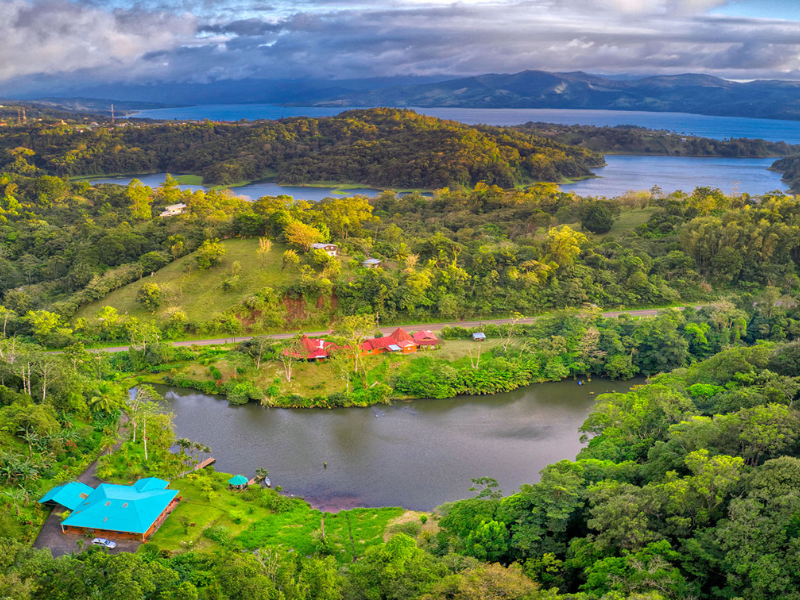
Retirement Guide
Costa Rica Retirement Real Estate in 2026: What Retirees Should Know Before Buying
The 2026 market rewards prepared retirees: price trends remain positive, sellers are negotiating, and much of the old advice no longer applies. Here is the current picture — costs, residency, healthcare, ownership, and where the real value sits.
Gina Briguglio · July 2026
Researching a retirement move to Costa Rica? Much of what you have read may be several years behind the market. The $1,200-a-month budget. Residency approved in three months. A villa that pays for itself through short-term rentals.
Those stories still circulate. In 2026, however, retirees need more realistic expectations about property prices, monthly costs, residency timelines, healthcare access, maintenance, and rental income.
Costa Rica Retirement Real Estate: The 2026 Numbers at a Glance
Current market estimates point to continued residential price growth, but conditions differ substantially by region, property type, condition, and price range.
Independent 2026 analysis estimates that Costa Rica residential prices increased approximately 10% during the 12 months to June 2026 and forecasts national growth of approximately 7% for the full year.
Costa Rica Real Estate CR uses that national context alongside MLS activity, regional listings, buyer behavior, and property-level conditions across Guanacaste. A family home in an inland community, a condominium in the Central Valley, and a luxury villa in Playa Flamingo respond to very different demand drivers.
For retirees, the market conditions in a specific town matter more than any single nationwide figure.
At the same time, resale properties are taking longer to sell, negotiation is common, and residency applications may take considerably longer than older guides suggest.
Costa Rica remains highly attractive for retirees, but successful buyers now need current information, realistic budgets, and careful due diligence.
2026 Retirement Real Estate Snapshot
Costa Rica remains attractive for retirees, but the assumptions have changed. Price trends remain positive, but buyers often have more time to compare properties and negotiate. Retirees should evaluate healthcare access, road conditions, water reliability, maintenance, and full ownership costs before making an offer. Rental income should be treated as potential rather than guaranteed.
Data note: Market information in this guide combines independent third-party estimates, official economic and tourism information, MLS and listing activity, regional brokerage observations, and Costa Rica Real Estate CR’s review of current buyer behavior. Broader market figures provide context and should not replace property-specific comparable analysis, legal review, or valuation.
Why Costa Rica Remains a Retirement Real Estate Destination in 2026
A Stable Lifestyle Market, Not a Speculative Boom
Costa Rica’s appeal to foreign buyers has never rested on quick flips. Instead, it rests on the fundamentals that make a country livable for decades: political stability, functioning healthcare, territorial taxation, and established expat communities. Add a mature property market with real title records, real attorneys, and real comparables.
The character of the market backs that up. Growth has been steady and lifestyle-driven rather than the kind of vertical spike that precedes a correction. Demand is coming from people who intend to live in what they buy. That’s a healthier foundation than any speculative surge.
Why Retirees Continue to Look at Costa Rica
The draw hasn’t changed much: walkable beach communities, a warm year-round climate, and access to both public and private healthcare. Add an infrastructure built around foreign buyers — bilingual attorneys, escrow services, property managers, and experienced international agents. Costa Rica real estate for retirees is a mature, well-served market, not an experiment.
What has changed is the sophistication of the buyer. People researching retiring in Costa Rica today are shopping for long-term lifestyle value, not a property gain they can brag about at a dinner party. Instead, they’re asking about hospital distance, HOA reserves, and road conditions in the rainy season. As a result, the market is rewarding that discipline.
Costa Rica Real Estate Market Update for Retirees in 2026
National Property Prices Are Still Rising
Independent 2026 market analysis estimates that Costa Rica residential prices increased approximately 10% during the 12 months to June 2026, with national growth forecast at approximately 7% for the full year. Prime coastal markets are estimated to be performing above the national pace, while some inland and locally financed markets are growing more slowly. That does not mean every property is appreciating at the same rate. Location, title quality, water access, condition, management, road access, and asking price all affect how an individual property performs. Rising prices and a slower resale market can coexist. In 2026, they do.
Costa Rica Residential Market — 2026 at a Glance
| Metric | Current reading |
| Estimated residential price growth, 12 months to June 2026 | Approximately 10% |
| Forecast national residential price growth for full-year 2026 | Approximately 7% |
| Typical residential resale marketing period | Approximately 360–420 days |
| Properties estimated to sell at or below asking price | Most properties; one independent estimate places the share near 90% |
| Typical reduction from original asking price | Approximately 6%–12% |
Source: Independent 2026 Costa Rica market analysis, including TheLatinvestor’s price-trend and market reports, together with MLS activity, regional listing data, and buyer-market observations reviewed by Costa Rica Real Estate CR. Figures provide broad market context and should not be applied automatically to an individual property
Homes Are Taking Longer to Sell
Coastal and higher-priced homes are taking longer to sell than they did at the peak — often many months from listing to closing, and longer still for property that is overpriced or hard to access.
That number tells you something about the buyer pool, because people are taking their time. They’re comparing locations, scrutinizing condition, questioning price, checking access roads, and running the numbers on long-term ownership costs before they commit. Sellers who priced for the 2021 frenzy, though, are learning patience the hard way.
Buyers Have Negotiation Power in 2026
This is the dynamic that should shape your entire strategy: with inventory ample and coastal listings sitting longer, many properties are closing at or below asking price, and negotiation is once again a normal part of the process rather than a long shot.
The asking price is an opening position. Treat it that way. A well-prepared buyer — clear on residency planning, firm on budget, and working with an agent who knows the local comparables — can negotiate from genuine strength right now. As a result, property condition and pricing strategy matter more than they have in years.
Condos Are Gaining Ground with Retirees
Standalone homes remain an important part of Costa Rica’s residential market, while condos and managed homes continue to attract retirees seeking simpler ownership.
The condo shift is a retiree story. Turnkey living, gated security, shared maintenance, and lock-and-leave convenience are exactly what buyers in their sixties and seventies are prioritizing — especially those splitting time between Costa Rica and family back home. When the pool gets cleaned and the garden gets trimmed whether you’re in the country or not, ownership gets a lot simpler.
Guanacaste and the Nicoya Peninsula: Costa Rica’s Premium Retirement Market
Why Guanacaste Commands Higher Prices
Guanacaste and the Nicoya Peninsula sit at the top of Costa Rica’s expat-focused market, and they’ve earned the position. The region combines established beach communities with restaurants, healthcare, property-management services, international amenities, and convenient access through Liberia International Airport. Many Gold Coast communities are within roughly an hour of direct connections to major North American cities.
For retirees, that access matters. It affects family visits, medical travel, shopping, professional services, and long-term convenience.
Independent 2026 estimates place year-over-year residential price growth in Playa Flamingo and Potrero in the mid-teens, with Tamarindo and Langosta also showing strong estimated growth. These are broad regional estimates, not guaranteed appreciation figures for any specific property. They do, however, reflect the continued strength of established coastal communities with limited well-positioned inventory and strong international demand.
What Premium Guanacaste Pricing Means for Retirees
Prime Guanacaste beach communities include some of Costa Rica’s highest-priced residential markets, particularly for ocean-view villas, walk-to-beach homes, large estates, and properties near established tourism infrastructure. However, condominiums, inland homes, older properties, and homes several minutes from the beach may be available at substantially lower price points. Retirees should compare properties within the same community and property category rather than relying on a broad regional headline figure.
Where Retirees May Find Better Value
Retirees hunting for stronger value have options worth comparing against Guanacaste: the Central Pacific, the Caribbean corridor, inland towns near the coast, and communities positioned along improving infrastructure. For a region-wide breakdown of Guanacaste’s communities and market dynamics, see our Guanacaste Real Estate guide.
The value equation itself is shifting. It’s less about raw beach proximity and more about access — to healthcare, to services, to good roads, to an airport. A home twenty minutes inland with a paved road and a clinic nearby may serve you better over fifteen years than an oceanfront property at the end of a rough track. The market is starting to price that in.
Explore the Gold Coast
Comparing property types across the Gold Coast?
Our current Guanacaste listings can help you see how turnkey condos, gated-community homes, and ocean-view estates differ by location, upkeep, and price point — a useful reference as you narrow down what fits your retirement plans. For community-level detail, explore our area guides for Mar Vista, Playa Flamingo, Playa Potrero, Brasilito, and Tamarindo.
The Turnkey Premium: What Retirees Actually Want in 2026
Luxury Demand Remains Active, but Buyers Are More Selective
Luxury coastal demand remains active, particularly for legally clean, well-located villas in established communities.
Buyers are scrutinizing asking prices, condition, water availability, road access, title, management, insurance, maintenance, and rental history more carefully than they did during the most competitive post-pandemic period.
Strong regional price estimates do not mean every luxury property is performing equally. Well-positioned and properly priced homes may continue to attract interest, while overpriced or compromised properties can remain available considerably longer.
Why Turnkey Homes Can Be More Practical Than Fixer-Uppers
For many retirees, a Costa Rica property should simplify ownership rather than create a long-distance renovation project. Managing a remodel from abroad can involve unfamiliar permitting, contractor supervision, material delays, furnishing, utility upgrades, and unexpected expenses. Move-in-ready properties reduce those demands. In Costa Rica Real Estate CR’s recent buyer conversations, well-executed turnkey homes have generally attracted stronger interest than properties requiring extensive renovation or remote project management.
What “Turnkey” Should Mean in Costa Rica
The term “turnkey” is used inconsistently in property listings, so buyers should evaluate the home’s actual condition rather than rely on the label alone. A true turnkey retirement property should offer reliable utilities, functional electrical and plumbing systems, appropriate air conditioning, finished indoor and outdoor living areas, practical storage, secure access, and a clear maintenance or property-management plan.
Any unresolved issue involving water, utilities, drainage, roofing, internet, furnishings, or management should be treated as a due-diligence consideration. In Guanacaste, the strongest retirement properties combine lifestyle appeal with practical ownership features such as dependable access, low-maintenance construction, comfortable outdoor areas, and flexible space for guests or extended stays.
RETIREMENT PROPERTY EXAMPLE
Casa Selamar — Brasilito, Costa Rica
For a practical example of flexible retirement living in this market, see Casa Selamar in Brasilito — a 4-bedroom main home with a detached 2-bedroom guest house, private pool, main-level primary bedroom, rooftop partial ocean views, and easy access to Brasilito Beach, Reserva Conchal, and Flamingo Marina.
Featured-property note: Casa Selamar is represented by Costa Rica Real Estate CR and is included to illustrate current property features and flexible living options available to retirees in Guanacaste.
Condos, Gated Communities, and Lower-Maintenance Living
Why Condos Are Becoming More Popular with Retirees
Condos and managed homes are attractive to retirees because they reduce the number of daily ownership responsibilities. Shared maintenance means the roof, the pool, and the landscaping are someone else’s Tuesday. Similarly, gated security means you lock one door and fly home for the holidays. Amenities, walkability, and lower upkeep round out a package that fits how many retirees actually want to live. In our experience, the first year in Costa Rica is often easier in a lower-maintenance property. It gives newcomers time to learn the area before taking on a larger standalone home.
When a Standalone Home Still Makes Sense
Standalone homes remain an important part of Costa Rica’s residential market. They can offer greater privacy, garden space, room for pets, guest accommodations, private pools, and more control over how the property is used and maintained.
For retirees planning to live in Costa Rica most of the year — rather than seasonally — the standalone home is often still the right answer.
The Trade-Off Between Privacy and Convenience
The honest framing is this: you’re choosing which set of responsibilities you’d rather carry. For instance, a condo trades privacy and space for convenience and lower personal upkeep, with HOA fees as the ongoing cost of that convenience. Conversely, a single-family home trades convenience for autonomy, with maintenance and security as your own responsibility — or your property manager’s.
Weigh maintenance obligations, HOA fees and rules, privacy, security, and space. Consider rental flexibility, and who manages the property when you’re away. There’s no universally correct answer. Instead, there’s only the answer that matches how you’ll actually live.
Infrastructure Is Reshaping Costa Rica Retirement Hotspots
Why Medical Access Matters More Than Beach Isolation
A quiet shift is underway in where retirement demand lands. The isolated beach pocket is losing ground. Gorgeous and remote, but forty minutes from the nearest clinic on a road that washes out in October. Buyers are choosing connected locations instead.
The reason is simple and a little unsentimental: retirees age. Proximity to hospitals, clinics, pharmacies, services, airports, and dependable roads stops being an abstraction the first time you need it. In our recent Guanacaste buyer conversations, the most common retiree questions are no longer about beach proximity alone. Instead, they’re about medical access, rainy-season roads, HOA rules, and how a property is managed when the owners are abroad. Buyers in 2026 are pricing that reality into their decisions upfront rather than discovering it in year eight.
The Rise of Infrastructure-Led Retirement Markets
Independent market analysis suggests that properties near completed and useful infrastructure can carry premiums over comparable but less-connected locations.
For retirees, the takeaway is worth sitting with: road access and healthcare proximity are becoming as important as beach proximity. Although infrastructure improvements do not guarantee appreciation, better road access can strengthen a community’s practical appeal. The next wave of appreciation may follow the asphalt, not the shoreline.
Residency Options for Retirees in Costa Rica
Pensionado Residency
Costa Rica Pensionado residency is the classic retirement route, and it remains refreshingly accessible. The core requirement is proof of at least $1,000 per month in lifetime pension income. Social Security, a government or corporate pension, or similar guaranteed income all qualify.
Rentista Residency
For retirees without a formal pension — those living on investments, savings, or other passive income — the Rentista category is the alternative. It requires proof of at least $2,500 per month in passive income. Same destination, different paperwork.
Digital Nomad Visa vs. Retirement Residency
The Digital Nomad Visa gets confused with retirement residency constantly, and the confusion costs people time. It’s a different instrument for a different person: a remote worker earning foreign employment income of at least $3,000 per month, or $4,000 for families.
Here’s the part that matters for retirees: the Digital Nomad Visa is not itself a pathway to permanent residency or citizenship. If your plan is to stay, it’s the wrong tool. Pensionado and Rentista are residency tracks; the nomad visa is a long stay with an expiration date.
How Long Residency Really Takes in 2026
Older guides claim Costa Rica residency takes two to three months. That timeline is no longer reliable for current planning. Current professional guidance indicates that Pensionado and Rentista applications may take approximately six to twelve months. Processing time varies according to documentation, case complexity, filing quality, and DGME workload.
Plan around that. Retirees who file early, keep documents current, and work with experienced immigration counsel move through the queue with far less friction. Those who assume the old timeline end up improvising.
Residency Note
Residency requirements and processing timelines can change. Confirm current rules with a qualified Costa Rican immigration attorney before filing. For a deeper look at residency pathways, healthcare, and daily life, see our Ultimate Relocation Guide to Costa Rica.
Key Costa Rica Retirement Terms Every Buyer Should Know
DIMEX
DIMEX — Documento de Identidad Migratoria para Extranjeros — is the identification card issued to foreign residents. It’s the key that unlocks practical life in Costa Rica: opening a local bank account, signing a cell phone contract, registering a vehicle. Until you hold one, many routine tasks require workarounds.
DGME
DGME — Dirección General de Migración y Extranjería — is the national immigration agency. DGME processes residency applications, and timelines vary according to documentation, case complexity, filing quality, and agency workload.
CAJA / CCSS
CAJA — formally the Caja Costarricense de Seguro Social — is Costa Rica’s public universal healthcare system. Temporary and permanent residents are generally required to enroll in CCSS and make assessed monthly contributions. Contribution amounts are determined individually and should be confirmed directly with CCSS or qualified residency counsel.
EBAIS
EBAIS — Equipo Básico de Atención Integral en Salud — are the neighborhood-level public clinics that form the front line of the CAJA system. Once residency is approved, retirees register at their local EBAIS, which becomes their first point of contact for public healthcare. Knowing where your EBAIS is should be part of evaluating any property.
Territorial Taxation
Costa Rica generally applies a territorial tax system, under which qualifying foreign-sourced retirement income may fall outside Costa Rican income tax. Treatment depends on the source of income and the retiree’s individual circumstances, and home-country tax obligations may still apply. Confirm your position with a qualified cross-border tax professional.
Healthcare Costs and CAJA Contributions for Retirees
What CAJA Covers for Residents
CAJA membership gives residents access to Costa Rica’s public healthcare system — hospitals, clinics, specialists, and prescriptions within the public network. For retirees, this is not a side note. Healthcare access is arguably the single most important variable in long-term retirement planning. Costa Rica’s system is a central reason the country keeps topping retirement destination lists.
Many expats also pair CAJA with private insurance or pay-as-you-go private care. The public system is the foundation; private providers add speed and choice. Still, CAJA is the base layer, and it comes with the residency you’re already pursuing.
How Much Retirees Usually Pay
Temporary and permanent residents are generally required to enroll in CCSS and make assessed monthly contributions. Contribution amounts are determined individually and may depend on the assessment method applied by CCSS.
Retirees should request an individualized estimate rather than relying on a general percentage or another resident’s experience. Confirm the expected contribution directly with CCSS or qualified residency counsel.
Why EBAIS Registration Matters
Approval isn’t the finish line. After residency comes through, retirees must register at their local EBAIS clinic — the step that actually activates access to the CAJA system in your neighborhood. Skip it, and you’re a resident on paper with no practical entry point to public care. Handle it early, and the system is there when you need it.
Healthcare Note
CAJA contribution rates and healthcare requirements are set by Costa Rican authorities and can change. Verify current rates and registration requirements before budgeting.
Cost of Living in Costa Rica: What Retirees Should Budget in 2026
Why the $1,200/Month Retirement Myth Is Outdated
You’ve seen the headline: “Live like royalty in Costa Rica on $1,200 a month!” It made for great blog traffic a decade ago. In 2026, in the places most retirees actually want to live, it’s fiction. Real Costa Rica retirement cost of living numbers look different now.
Inflation did its work. Meanwhile, supply chains raised the cost of everything imported. On top of that, a stronger local currency made dollar budgets stretch less. As a result, the couple arriving today with a $1,200 monthly budget and beachfront expectations is in for a hard landing.
A More Realistic Monthly Budget
Cost-of-living estimates for expat couples in prime coastal areas commonly land in the range of about $2,000 to $2,500 per month for a comfortable but modest lifestyle. Treat that as a rough planning baseline, not an all-inclusive guarantee — the real figure depends heavily on housing, transportation, healthcare, and lifestyle, and prime coastal zones sit at the higher end. Confirm current costs for your specific town and situation before budgeting.
Still remarkable value by North American standards. Just not the fairy tale.
Why Prime Expat Zones Cost More
The premium in prime coastal zones is structural, not incidental. For example, dining runs higher where tourism sets the prices. Likewise, imported goods carry shipping and duty. Private healthcare, transportation, insurance, HOA fees, utilities, and property maintenance all cost more, because demand is concentrated and everything arrives by truck.
None of this is a reason to avoid the coast. Rather, it’s a reason to budget for the coast you’re actually moving to, not the one described in a 2015 blog post.
Buying Property for Rental Income: Why Retirees Should Be Conservative
The End of Easy Airbnb Assumptions
The old pitch wrote itself: buy the villa, live in it four months a year, rent it the other eight, and let the guests fund your retirement. Some owners genuinely pulled it off — for a while, in the right locations, in a different market.
In 2026, treat that assumption with real caution. However, the short-term rental landscape has matured, competition has thickened, and the tourism market has stabilized into something more predictable and less forgiving of optimistic projections.
Costs That Can Reduce Rental Returns
Serious buyers now underwrite rental projections conservatively. The expense side of the ledger has grown teeth: rising operating costs, management fees, cleaning between every stay, and repairs in a tropical climate. Then add utilities, insurance, marketing, and the occupancy swings of seasonal tourism.
Independent 2026 estimates from TheLatinvestor put gross rental yields at roughly 6% to 8% for well-chosen Costa Rica properties — and gross is the operative word. Gross rental income is a headline. Net rental income, after management, repairs, vacancy, insurance, and HOA costs, is the number that matters, and the gap between the two surprises people.
What Retirees Should Analyze Before Buying
If rental income is part of your plan, demand evidence before you buy. Review:
-
- Actual rental history, not projections
- Documented operating expenses
- Occupancy data across seasons
- HOA rules — some communities restrict short-term rentals outright
- Management fees, local demand drivers, and slow-season performance
A property that pencils out on documented history is an asset with income potential. A property that pencils out only on a listing agent’s projection is a hope. Buy the first kind.
Rental Income Note
Rental performance varies by property, location, season, and management. Past rental history does not guarantee future income; review actual documentation and consult qualified professionals before relying on rental income in your retirement plan.
Related Reading
For a community-level look at how rental performance actually works in one of Guanacaste’s most established gated communities, read our analysis: Rental Income in Mar Vista, Playa Flamingo — What Actually Works.
Property Security and the “Squatter Rights” Myth
What the Squatter Rights Fear Gets Wrong
Spend an evening in expat forums and you’ll find the horror story: leave your Costa Rican property vacant, and squatters will claim it through derecho de posesión while you’re gone. The story spreads because fear travels faster than nuance.
The reality: property security deserves genuine attention, but the risk to owners of properly titled property is often overstated online, or discussed without the legal distinctions between titled ownership, possession claims, and untitled land. Many widely shared disputes involve unclear possession histories, untitled or inadequately monitored land, disputed boundaries, or insufficient legal and physical oversight. Every case is fact-specific.
Why Titled Property Matters
Costa Rica maintains a national property registry — the Registro Nacional — and titled ownership registered through it carries real legal structure and protection, particularly for absentee owners. This is the foundation of safe property ownership in the country, and it’s why the first question in any purchase should be about title.
Titled owners who apply basic due diligence generally face far lower practical risk than the online horror stories suggest. Proper title verification, qualified legal review, tax compliance, and ongoing property oversight materially reduce practical ownership risk.
Legal Note
Property law questions are fact-specific. Always have a qualified Costa Rican real estate attorney review title, boundaries, and any possession history before purchasing.
Basic Due Diligence for Absentee Owners
The protective playbook is neither exotic nor expensive. First, verify title through the Registro Nacional before buying. Second, retain a qualified Costa Rican attorney. Third, maintain oversight of the property — hire professional property management if you’re away for stretches. Also, have someone inspect regularly. Finally, keep property taxes paid and legal records current.
Do those things and the squatter narrative becomes what it should be: a cautionary tale about neglected, untitled land — not a reason to skip one of Latin America’s most established property markets.
Retiree Buyer Checklist Before Making an Offer
Before signing anything, work through this list. Every item reflects a place where retirement purchases in Costa Rica either succeed quietly or go wrong expensively:
-
- Verify title through the Registro Nacional — confirm clean, registered, fee-simple ownership before anything else
- Confirm HOA rules and reserves — including rental restrictions, fee history, and the health of the reserve fund
- Ask for utility history — water reliability, electricity costs, and internet quality vary sharply by location
- Review rainy-season access — drive the road in your mind (or in person) during October, not just February
- Confirm the nearest EBAIS, clinic, hospital, and pharmacy — and the realistic travel time to each
- Review actual rental history if income matters — documented performance, not projections
- Budget the full carrying cost — CAJA contributions, insurance, HOA fees, maintenance, and property management
- Estimate closing and transaction costs — transfer taxes, legal fees, escrow charges, due-diligence expenses, and any corporation or financing costs
- Have a qualified Costa Rican attorney review the purchase agreement — before you sign, not after
Related Reading
For a step-by-step explanation of the purchase process — legal due diligence, escrow, closing costs, and title review — read our full guide to buying property in Costa Rica.
Is Costa Rica Real Estate a Buyer’s Market in 2026?
Buyers Have Time to Compare Options
With single-family homes averaging more than a year on market, the frantic energy of past cycles is gone. Buyers can tour a property twice. For example, they can visit in both dry and rainy season. In addition, they can compare five options across three towns without watching listings vanish overnight. Time is leverage — use it.
Asking Price Is Not Always Final Price
The current indicators consistently point one way: buyers have room to negotiate. With coastal listings sitting longer and inventory ample, many properties close at or below asking price. The ask is where the conversation starts, not where it ends.
That doesn’t mean lowballing everything in sight — well-priced, well-maintained properties still command their value and occasionally their full ask. Rather, it means walking in with comps, a clear-eyed read on condition, and the confidence to negotiate.
Strong Properties Still Hold Value
Call Costa Rica retirement real estate a selective market rather than a soft one. This is not a collapse — prices are still rising nationally even as buyers gain leverage. Instead, what’s happened is a rebalancing: quality properties in connected locations hold and build value, while overpriced or compromised inventory sits and negotiates.
For a patient, prepared retiree, that’s close to an ideal environment.
Appreciation without frenzy. Leverage without distress.
Best Property Types for Retiring in Costa Rica
Retirement homes in Costa Rica fall into four broad categories. Each fits a different lifestyle.
Matching Priorities to Property Types
| Retirement priority | Property type often worth considering | Main issue to verify |
| Seasonal use | Condo or managed gated home | HOA rules and management |
| Full-time privacy | Standalone home | Security and maintenance |
| Rental flexibility | Home or condo with documented history | Rental restrictions and net returns |
| Custom design | Urbanized lot | Water, permits, and construction oversight |
| Easy first year | Turnkey condo or managed home | Monthly carrying costs |
Turnkey Condos
The fit: retirees who want security, minimal maintenance, resort-style amenities, and true lock-and-leave convenience. Ideal for part-year residents and anyone who’d rather spend their mornings at the beach than coordinating with a pool technician.
Single-Family Homes
The fit: retirees prioritizing privacy, space, and autonomy — larger living areas, gardens, private pools, room for pets, and guest accommodations for the family pipeline from Liberia’s airport. Best suited to full-time or majority-time residents.
Urbanized Lots
The fit: buyers who want exactly the home they’ve imagined and are prepared to earn it. Custom builds offer real upside, though they demand careful planning, permitting patience, construction oversight, and a temperament that doesn’t crack when timelines stretch. Custom building remains a viable option for buyers prepared to manage water availability, permits, utilities, construction oversight, and longer timelines.
Luxury Turnkey Homes
The fit: retirees who want premium design, privacy, services, and move-in-ready comfort with zero renovation risk. With the luxury segment more selective and better-priced than at the peak, discerning buyers are finding opportunities at this tier that didn’t exist two years ago.
Strategic Feature
Casa Vista Escondida — Pacific Heights
One current example is Casa Vista Escondida in Pacific Heights — a contemporary five-bedroom, ~5,300 sq. ft. turnkey ocean-view estate on an elevated 1.74-acre homesite, with a separate prepared building site (water-availability letter and electricity in place).
Another option is Casa Blanca in Hacienda Pinilla, Tamarindo — a 7-bedroom golf course estate with a private guest apartment and documented rental history.
Featured-property note: examples may include properties represented or marketed by Costa Rica Real Estate CR and are provided to illustrate current property types and features.
Final Takeaway: What Retirees Should Know Before Buying in Costa Rica
Costa Rica retirement real estate remains one of the most compelling opportunities in Latin America. What’s changed, rather, is the sophistication the market demands. The 2026 landscape rewards buyers who work from current data rather than a decade of recycled blog wisdom.
The current picture in brief: national prices are still rising, though independent forecasts put the pace nearer 7% for 2026 than the double-digit surges of recent years, and buyers hold meaningful negotiation power. Guanacaste and the Nicoya Peninsula remain premium retirement markets, particularly for buyers prioritizing airport access, established services, healthcare proximity, and well-managed coastal communities. Residency runs six to twelve months, not three. A realistic couple’s budget in prime zones commonly starts around $2,000 to $2,500 per month. And rental income deserves conservative, evidence-based projections — treat it as potential, never as a guarantee.
The strongest opportunities share a profile: well-priced, well-managed, turnkey properties in locations with good road access, healthcare proximity, and durable lifestyle fundamentals. In the Gold Coast market, the retiree properties that tend to remain most attractive to buyers share three traits. Clean title, low-maintenance ownership, and realistic access to services. Find that combination and verify everything with a qualified attorney. Do that, and Costa Rica in 2026 offers something rare: a retirement market where the lifestyle is proven, the legal framework is established, and time is on the buyer’s side.
Ready to Find Your Retirement Home on Costa Rica’s Gold Coast?
Navigating this market well takes more than listings — it takes someone who knows the communities, the residency process, and the honest trade-offs between them.
Gina Briguglio is a licensed Realtor in Costa Rica with 30+ years of experience, CIPS certified, and a member of CRGAR and NAR. She has guided international retirees and lifestyle buyers from initial research through property tours, negotiations, due diligence, and closing. Whether you’re eighteen months out or ready to tour properties next month, the smartest first step is a conversation.
Gina Briguglio, Licensed Realtor
Call or WhatsApp: +506 8423 4370 (CR) | +1 312 399 2857 (US)
Frequently Asked Questions About Costa Rica Retirement Real Estate
Is Costa Rica still a good place to retire in 2026?
Yes. Costa Rica remains a strong retirement destination thanks to its lifestyle, healthcare system, territorial tax structure, established expat communities, and stable real estate demand. The caveat: use updated 2026 assumptions for property prices, residency timelines, and cost of living rather than figures from older guides.
Are Costa Rica property prices going up?
Yes, though more slowly than during the post-pandemic surge. Independent 2026 estimates point to continued national residential price growth, although performance varies considerably by region, property type, condition, and price segment.
Is Costa Rica real estate a buyer’s market?
In many respects, yes. Coastal inventory is ample and taking longer to sell, many properties close at or below asking price, and negotiation is once again a normal part of the process. Buyers who come prepared with local comparables are well positioned right now.
How much does property cost in Guanacaste, Costa Rica?
Guanacaste and the Nicoya Peninsula remain among Costa Rica’s most expensive expat-focused markets, with prime beach-town listings routinely reaching well into seven figures. Prices vary widely by town, proximity to the beach, and title quality, so treat any regional average as a starting point rather than a guide to a specific property.
What is the best type of property for retirees in Costa Rica?
Many retirees favor turnkey condos, gated homes, and low-maintenance properties for their security, convenience, and easier management, particularly in the first years of ownership. Meanwhile, standalone homes remain popular with retirees who want more privacy, space, gardens, pools, or guest accommodations.
How long does Costa Rica residency take in 2026?
Pensionado and Rentista applications may take approximately six to twelve months, although timing varies according to documentation, case complexity, filing quality, and DGME workload.
What is the Pensionado visa requirement in Costa Rica?
The Pensionado residency category generally requires proof of at least $1,000 per month in pension income.
What is the Rentista visa requirement in Costa Rica?
The Rentista category generally requires proof of at least $2,500 per month in passive income.
Is the Digital Nomad Visa the same as retirement residency?
No. The Digital Nomad Visa is designed for remote workers earning foreign income of at least $3,000 per month, or $4,000 for families. However, it is not itself a pathway to permanent residency or citizenship.
How much money does a couple need to retire in Costa Rica?
In prime expat zones, a realistic comfortable-but-modest budget for a couple now starts around $2,000 to $2,500 per month minimum. However, older claims of living luxuriously on $1,200 per month are generally outdated.
Do retirees pay tax on foreign pension income in Costa Rica?
Costa Rica generally applies a territorial tax system, under which qualifying foreign-sourced retirement income may fall outside Costa Rican income tax. Treatment depends on the source of income and individual circumstances, and home-country tax obligations may still apply. Confirm your position with a qualified cross-border tax professional.
Do retirees have to pay into Costa Rica’s healthcare system?
Yes. Temporary and permanent residents are generally required to enroll in CCSS and make assessed monthly contributions. Contribution amounts are determined individually, so confirm the current assessment method directly with CCSS or qualified residency counsel.
Can retirees buy property in Costa Rica and rent it out?
Yes, but rental income should be projected conservatively. In 2026, careful buyers weigh operating costs, property management fees, occupancy rates, and a more stabilized tourism market before counting on rental returns.
Are squatters a major risk for Costa Rica property owners?
The risk is often exaggerated online. Owners of properly titled property who apply basic due diligence generally face far lower practical risk than the horror stories suggest. That means Registro Nacional verification, a qualified attorney, property management, and regular inspections.
Sources & Methodology
This article combines independent market estimates, official Costa Rican guidance, MLS and listing activity, regional brokerage observations, and Costa Rica Real Estate CR’s first-hand experience working with international buyers and properties across Guanacaste.
National price trends, forecasts, resale timelines, negotiation ranges, coastal appreciation estimates, and rental-yield estimates draw partly on TheLatinvestor’s 2026 Costa Rica price-trend and market reports. These figures provide broad market context and are not appraisals, guarantees, or substitutes for property-specific comparable analysis.
Costa Rica Real Estate CR’s original contribution is the interpretation of these broader trends through current buyer conversations, property tours, local comparisons, ownership concerns, and the practical trade-offs retirees face when evaluating properties on the Gold Coast.
Residency and healthcare details should be verified through official channels before making decisions:
-
- Residency requirements and processing: Dirección General de Migración y Extranjería (DGME)
- Healthcare contributions and enrollment: Caja Costarricense de Seguro Social (CCSS)
- Property title verification: Registro Nacional de Costa Rica
- Tax treatment of foreign income: Confirm with a qualified cross-border tax professional familiar with Costa Rica’s territorial system and your home country’s requirements
Market statistics reflect conditions at the time of review (July 2026) and change over time. This article is updated periodically; always confirm current figures with a licensed professional before making legal, financial, or purchase decisions.
Disclaimer
This article is for general informational purposes and does not constitute legal, tax, or investment advice. Property details, residency requirements, and market conditions change; buyers should verify all figures independently and conduct full due diligence with a qualified Costa Rican attorney before purchasing.

Gina Briguglio
Licensed Realtor · Costa Rica Real Estate CR
Gina has 30+ years of experience helping international buyers, retirees, and lifestyle investors purchase property on Costa Rica’s Gold Coast. She is CIPS certified and a member of CRGAR and NAR, working with buyers across Playa Flamingo, Playa Potrero, Brasilito, Tamarindo, and the surrounding communities. View profile →