Costa Rica is one of the easiest countries in Latin America for a foreigner to buy property in. You can own titled land outright, in your own name, with the same rights as a Costa Rican citizen, and you don’t need residency to do it. The process is straightforward when you know where the traps are: beachfront land that can’t be owned, titles nobody checked, water that was never guaranteed, and costs that weren’t in the budget.
I’m Gina Briguglio. I spent 18+ years in residential and investment real estate, first as an agent and investor in Chicago, and I’ve lived and sold property on the Guanacaste Gold Coast for over a decade. I sit on the board of the Costa Rica Global Association of Realtors (CRGAR). This guide walks you through buying here the way I’d explain it to a client: what’s allowed, the steps in order, what it really costs, and what’s different if you’re coming from the United States.
Buying property in Costa Rica at a glance
- Who can buy: anyone. Foreigners have the same ownership rights as citizens, and you don’t need residency.
- The exception: the first 200 meters from the high-tide line (the maritime zone). That land is mostly held by government concession, not owned.
- Closing costs: the buyer pays them, about 4.5% of the price including attorney fees. On a $500,000 home, about $22,500. The seller pays the real estate commission.
- Timeline: about 45 to 60 days from accepted offer to closing, including a 14- to 21-day due-diligence period.
- Currency: property is priced and sold in U.S. dollars.
- Residency: buying doesn’t give you residency. It can support an investor application, but that’s a separate process.
Can Foreigners and Americans Buy Property in Costa Rica?
Yes. Costa Rica’s constitution gives foreigners the same individual rights as Costa Ricans and protects private property. In practice that means an American, Canadian or European buyer can purchase titled land, a house or a condo, register it at the National Registry in their own name, rent it out, sell it, and leave it to their heirs, exactly as a local can.
You don’t need residency, a local partner or a special permit to buy titled property. You don’t need to form a company either, although some buyers choose to (more on that below).
The one real restriction is on the coast.
Titled Land vs. Concession Land: The Maritime Zone
Costa Rica’s Maritime Zone Law (Law 6043 of 1977) makes the first 200 meters inland from the ordinary high-tide line public land. It’s split in two:
- The first 50 meters is the public zone. No one, Costa Rican or foreign, can own it, lease it or build on it.
- The next 150 meters is the restricted zone. The municipality can grant a concession there, a renewable right to use the land for a set term, where an approved coastal zoning plan exists.
A concession is not ownership. It’s closer to a long-term lease from the municipality, with annual fees, approved uses, and transfers that need municipal and tourism-board approval.
Foreign buyers face an extra limit. Under Article 47 of the law, a foreigner with fewer than five years of residency in Costa Rica can’t hold a concession, and neither can a company that is more than 50% foreign-owned. That’s why foreign buyers of concession property usually hold up to 49% through a company with a Costa Rican majority partner until they qualify themselves. It works, but it’s a structure to set up with an attorney, not something to improvise.
Titled land inside the 200 meters does exist, but it’s rare: mostly land registered before the 1977 law, plus a few coastal-city exceptions. Some of those titles have later been challenged, so every one needs its own legal check.
Beyond the 200 meters, normal property rules apply. Most homes and condos on the Gold Coast sit on titled land a short walk from the sand, and that’s what most of our buyers purchase.
The Buying Process, Step by Step
1. Decide what you’re buying and why
Your goal shapes everything else. A full-time home, a vacation home, a rental and a residency investment each point to different areas, property types and ownership structures. A beachfront condo with on-site management suits an owner who’s here a few months a year. A home in a quieter community suits someone moving down full time. Land suits a buyer ready to build, which adds permits, water and construction to the plan.
Set your budget to include closing costs (about 4.5%, paid by the buyer) and the yearly costs of owning, not just the price.
2. Choose your agent and your attorney
Costa Rica has no government license for real estate agents, so anyone can call themselves one. Look for membership in CRGAR and an agency registered with SUGEF, the financial regulator (registration is an anti-money-laundering requirement, not a license, but legitimate agencies have it). Ask how long they’ve worked in the specific towns you’re considering and how many closed sales they can show you there.
Hire your own real estate attorney early, one who works for you and not for the seller or the developer. In Costa Rica the closing is done by a notary, who must also be a licensed attorney. Our guide to hiring a real estate attorney in Costa Rica covers what to ask.
3. Search with local knowledge
On the Gold Coast, the reliable, professional MLS is the one run by CRGAR. Not every agent in Costa Rica uses it, so work with an agent who does: you’ll see more of the market, with better information. A well-connected local agent matters more here than in the U.S. Visit before you buy if you possibly can. See the area in the green season as well as the dry season (roughly November to April), drive the roads, and check the commute to a supermarket, a clinic and the airport.
4. Make an offer
Price your offer on recent closed sales in that specific community, not on asking prices. The offer becomes a written purchase-sale agreement that sets the price, the deposit, the due-diligence period, the closing date and what happens if either side backs out. Your agent usually drafts it; have your attorney review it before you sign.
5. Put your deposit in escrow
After the offer is accepted, the deposit goes to an escrow company supervised by SUGEF, never directly to the seller. The deposit is usually 10% of the price. Escrow companies follow strict source-of-funds rules, so expect to document where the money comes from.
6. Do your due diligence
This is the step that protects you, and it’s covered in its own checklist below. The purchase agreement usually allows 14 to 21 days for it. Your attorney checks the title and the legal status of the property; you and your agent check the physical property, the water and the community.
7. Decide how you’ll hold the title
In your own name or through a Costa Rican company. See personal name or corporation below.
8. Close
At closing, you and the seller sign the transfer deed (escritura) before the notary. The notary pays the transfer tax, files the deed and registers you as the new owner at the National Registry. Escrow releases the funds to the seller. From accepted offer to closing usually takes about 45 to 60 days.
9. Set up after closing
- Register with the municipality for property tax and declare the property’s value.
- Transfer the utilities, and join the HOA if there is one.
- Arrange insurance and, if you won’t be here full time, a property manager.
- If you’ll rent short term, register the rental with the tourism board (ICT) and with Hacienda, the tax authority, before your first guest.
If you’re moving here, our Costa Rica relocation guide covers the rest of the move.
Due Diligence Checklist for Guanacaste
Your attorney’s legal review and your own practical checks should cover:
- Title: the owner at the National Registry matches the seller, with no mortgages, liens, annotations or lawsuits against the property.
- Survey plan (plano catastrado): the registered plan matches the land on the ground, its boundaries and its size.
- Maritime zone: whether any part of the property falls within 200 meters of the high-tide line.
- Water: a water availability letter from the local water provider (often a community ASADA, or AyA). In parts of Guanacaste water is the limiting factor for building, so this matters most for land. Our post on buying land in Surfside, Playa Potrero shows why.
- Zoning and permits: the land-use certificate from the municipality, and building permits for the existing construction. For land, whether an environmental viability approval (SETENA) is needed for your plans.
- Access: the road to the property is public, or there is a registered easement.
- Taxes and fees: property tax, luxury home tax (if it applies) and municipal fees are paid up to date.
- Condos and gated communities: the bylaws (reglamento), HOA budget and fees, reserve fund, and any rental rules.
- The house itself: an independent inspection covering structure, roof, plumbing, electrical, pool and humidity.
- Company sellers: if the property is held in a corporation, who legally represents it and whether its filings are up to date.
What It Really Costs
Closing costs
In Costa Rica the buyer pays the closing costs, and the seller pays the real estate commission. That’s one of the biggest differences from buying in North America, so build it into your budget from the start. Most of the costs are set by law. Here’s what they look like on a $500,000 purchase:
| Cost | Typical rate | On $500,000 |
|---|---|---|
| Transfer tax | 1.5% of the higher of the sale price or the registered value | $7,500 |
| Registry and stamp fees | about 0.5% to 0.8% | about $4,000 |
| Notary and legal fee | about 1% to 1.5% | about $6,250 |
| VAT on the notary fee | 13% of the fee | about $800 |
| Escrow and other fees | varies | about $4,000 |
| Typical total | about 4.5% | about $22,500 |
In our closings, buyers typically pay about 4.5% in total, including the standard attorney fees. Older guides that quote closing costs as low as 1.5% are quoting the transfer tax alone.
Yearly costs of owning
- Property tax: 0.25% a year of the value registered with the municipality. Owners must declare that value at least every five years.
- Luxury home tax (Impuesto Solidario): applies when the construction value of a home exceeds a threshold set each year (₡143 million for 2026). The rate starts at 0.25% and rises to 0.55%, applied to the combined value of the construction and the land. It’s paid by January 15 each year.
- HOA fees: generally $200 to $500 a month for a condo, though they vary widely by building and amenities.
- Insurance, utilities and maintenance: salt air, sun and rain are hard on houses at the beach, so budget for upkeep.
If you rent it out
Rental income is taxed at 15% on 85% of the gross rent, about 12.75% of what you collect. Short stays of under 30 days also carry 13% VAT, charged to the guest and filed monthly. Add property management, typically 20% of rental income plus a monthly fee of about $150 to $200, and cleaning, and plan your numbers on net income, not on what the listing calendar shows. Our post on rental income in Mar Vista, Playa Flamingo looks at what actually works.
Paying for It
Most foreign buyers pay cash. Mortgages from Costa Rican banks are harder for non-residents to get, so buyers who borrow usually use seller financing, a loan or home equity line in their home country, or a lender that specializes in foreign buyers. Our guide to financing for foreigners in Costa Rica compares the options.
Plan the money transfer early. Escrow companies and banks here ask for proof of where the money comes from, and large international wires can take several days to clear.
Buying as an American: What’s Different
Your rights as a buyer are the same as anyone else’s, and the market is priced in dollars, so there’s no currency conversion on the purchase. What’s different is the paperwork on the U.S. side:
- U.S. taxes still apply. The U.S. taxes its citizens on worldwide income, so rental income from your Costa Rica property goes on your U.S. return as well. A foreign tax credit can often offset the Costa Rican tax you’ve already paid.
- Bank accounts: if you open a Costa Rican bank account and your foreign accounts total more than $10,000 at any point in the year, you must file an FBAR. The property itself isn’t an account and doesn’t go on the FBAR.
- Owning through a company adds U.S. filing requirements for foreign corporations. That’s one more reason most of our American buyers of a single home buy in their own name.
- When you sell: Costa Rica taxes the gain at 15%, and a primary residence is exempt. If you’re not a Costa Rican tax resident when you sell, the buyer must withhold 2.5% of the sale price and pay it to the tax authority. The U.S. will also tax the gain, with a credit for the Costa Rican tax.
Talk to a CPA who works with Americans abroad before you buy, not after. The right structure is much easier to set up at the start.
Personal Name or Corporation?
For years many attorneys set up a Costa Rican corporation (an S.A. or S.R.L.) for every foreign buyer. Today, for a single home or vacation property, most buyers hold the title in their own name. A corporation brings yearly obligations: corporate filings and the beneficial-ownership report (RTBF), which require a legal representative and, for owners without a local digital signature, a power of attorney. A company that falls behind can find its registry filings and certifications blocked.
A corporation still makes sense in some cases: several partners buying together, some concession properties (see above), or a larger rental business. Your attorney should explain the trade-off for your situation. And if you plan to use the property for investor residency, it generally needs to be in your personal name.
Does Buying Property Get You Residency?
Not automatically. Owning property and immigration status are separate. Property can support an application for investor residency (Inversionista), which a separate immigration process handles.
Since 2021 the investor threshold has been at least $150,000, set by Law 9996. That law’s five-year window of benefits ended in July 2026, and some advisers expect the amount to return to the earlier $200,000. The attorneys our clients work with are still advising $150,000, but confirm the current figure with your own immigration attorney before you count on it.
Other routes don’t depend on property: Pensionado (a lifetime pension of at least $1,000 a month) and Rentista ($2,500 a month for at least two years, or a $60,000 deposit in a Costa Rican bank). Our Costa Rica retirement real estate guide covers residency for retirees in depth.
Where to Buy on the Guanacaste Gold Coast
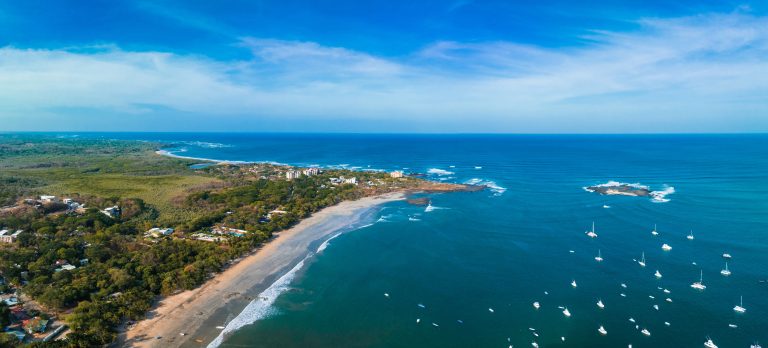
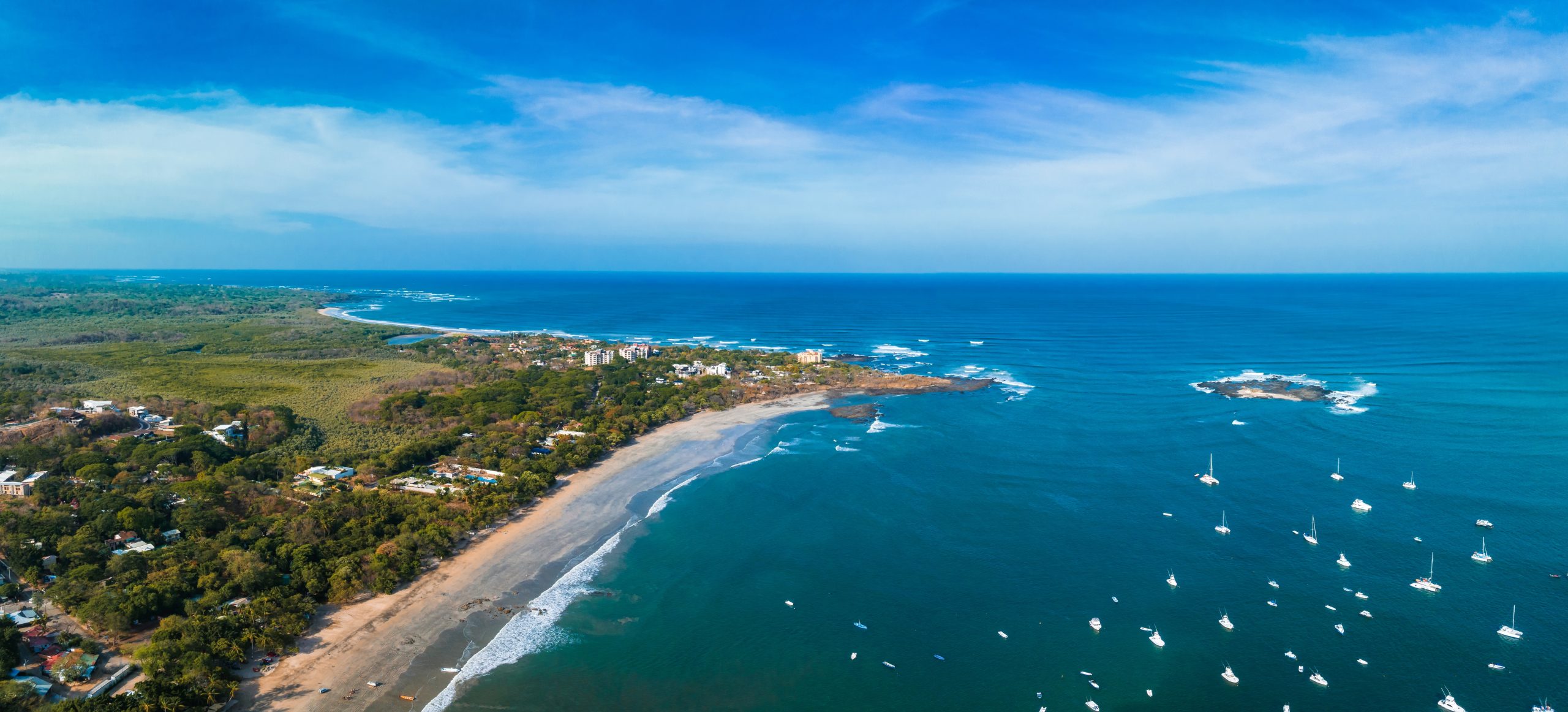
Guanacaste’s Pacific coast, from Playas del Coco south through Tamarindo and beyond, is the most active market for international buyers in Costa Rica. Liberia International Airport (LIR) has direct flights from major U.S. and Canadian cities, and the dry season runs roughly November through April.
Here’s what’s for sale on our site right now, by area, as typical (median) asking prices:
| Area | Listings for sale | Typical home | Typical condo |
|---|---|---|---|
| Tamarindo | 214 | $1.1M | $405K |
| Playa Potrero | 141 | $749K | $330K |
| Playa Flamingo | 98 | $2.4M | $525K |
| Playas del Coco | 97 | $588K | $319K |
| Playa Grande | 65 | $1.2M | — |
| Hacienda Pinilla | 54 | $2.2M | — |
| Playa Avellanas | 36 | $841K | — |
| Reserva Conchal | 28 | $2.9M | $951K |
| Las Catalinas | 25 | $1.8M | $769K |
Across the Gold Coast, our 769 listings have a median asking price of about $749,000; half are priced between about $386,000 and $1.6 million. The typical home asks about $1.25 million, the typical condo about $414,000 and the typical lot about $349,000. These are asking prices as of November 2026, not sale prices, and they move every week. A dash means too few condos are listed for a meaningful figure.
- Tamarindo has the most choice and the busiest town life.
- Playa Flamingo, its marina and the Mar Vista hillside are the most upscale stretch of the northern coast.
- Playa Potrero and Surfside, next door, are quieter and better value.
- Playas del Coco is the most affordable and the closest to the airport.
- Hacienda Pinilla and Reserva Conchal are gated golf-and-beach communities at the top of the market.
- Las Catalinas is a walkable, car-free beach town.
If you’d rather be inland, Nuevo Arenal on Lake Arenal offers cooler weather and lower prices. For the wider picture, see our Guanacaste real estate guide.
How to Choose a Real Estate Agent in Costa Rica
With no licensing system, the agent you choose matters more here than in the U.S. Ask:
- Are you a CRGAR member, and is your agency registered with SUGEF?
- How many sales have you closed in this specific area, and at what prices?
- Which attorneys, inspectors and escrow companies do you work with, and am I free to choose my own?
- Can you show me recent closed prices, not just asking prices?
- Who will handle the property after closing if I’m not here?
An agent with a lot of listings isn’t necessarily the one who knows a community best. Look for someone who knows which buildings have HOA problems, which streets flood, and which sellers will negotiate.
5 Mistakes Foreign Buyers Make
1. Assuming beachfront means owned
Most land within 200 meters of the high-tide line is concession land, not titled property, and foreigners face extra limits there. Ask for the legal status in writing before you fall for the view.
2. Skipping due diligence because the house feels right
Costa Rica’s National Registry makes title checks reliable, but only if someone actually does them. Survey plans that don’t match, missing permits and no water letter are all common, and all fixable before you sign, not after.
3. Budgeting for the price but not the costs
Closing costs run about 4.5%, and the buyer pays them. Then come property tax, HOA fees, insurance, maintenance and, for higher-value homes, the luxury home tax. Build all of it into your numbers.
4. Choosing an agent on listings alone
Without a license requirement, experience and local track record are your only filters. Check them.
5. Overestimating rental income
About 12.75% income tax on gross rent, 13% VAT on short stays, management, cleaning and slow months all come off the top. Run the numbers on net income before you buy for rental returns.
Frequently Asked Questions
How much money do I need to buy on the Gold Coast?
Condos start around $120,000 and lots around $45,000, but the typical condo listed on our site asks about $414,000 and the typical home about $1.25 million. Add about 4.5% for closing costs, which the buyer pays.
Do I need residency to buy property in Costa Rica?
No. Foreigners can buy titled property without residency. Residency only matters for holding a maritime-zone concession and, separately, if you want to live here full time.
Can I get a mortgage in Costa Rica as a foreigner?
It’s possible but harder than at home. Most foreign buyers pay cash, use seller financing or borrow against property in their home country. See our guide to financing for foreigners.
Can I buy property in Costa Rica without being there?
Yes. With an attorney and a power of attorney, you can complete a purchase remotely. We still recommend seeing the property and the area in person before you commit.
What taxes will I pay each year?
Property tax of 0.25% of the registered value, the luxury home tax if your home’s construction value is above the yearly threshold, and income tax and VAT if you rent it out.
Is buying property in Costa Rica safe?
Yes, when it’s done properly. Costa Rica has a centralized National Registry and strong property rights. The risks are specific and avoidable: concession land sold as owned, unchecked titles, missing permits and no water. An independent attorney, SUGEF-supervised escrow and a full due-diligence check cover them.
The Bottom Line
Buying property in Costa Rica is open to you as a foreigner, and on titled land it works much like buying at home. Hire your own attorney, use escrow, check the title, the water and the maritime zone, and budget for closing and ownership costs. Do that, and the hard part is choosing between Tamarindo, Flamingo, Potrero and the rest of the Gold Coast.
If you’re starting to look, get in touch. I’m happy to talk through areas, prices and timing, with no obligation.
Sources
- Law 6043, Maritime Zone Law (SCIJ, Procuraduría General)
- Registro Nacional (National Registry)
- Ministerio de Hacienda (tax authority)
- Dirección General de Migración y Extranjería (immigration)
- SUGEF (financial regulator)
Last reviewed November 2026. Tax thresholds and immigration rules change; confirm current figures with your attorney.